
Originally published in the Daily Bulletin on August 28, 2026, part of the monthly Inspiring Vibrant Health Column.
The Inland Empire’s open deserts, valleys and pine-lined mountains give us remarkable scenery and a deep connection to nature. Yet, this same geography can make it more challenging for residents to access health care.
The region’s rural communities stretch from mountain towns like Big Bear and Crestline to high desert areas such as Barstow, Trona and the Coachella Valley, all the way to Blythe near the Arizona border.
Many of these remote regions face the same challenges seen across rural America. The Centers for Disease Control says rural communities face higher rates of chronic conditions, poverty, and limited access to healthcare. We also know unintentional injuries happen more often in rural areas, often because of longer travel distances and higher-risk jobs.
According to the National Rural Health Association, opportunities for stable jobs and economic growth are also harder to find in rural areas, adding to the challenges families face.
It is well documented that there is a shortage of healthcare professionals across the Inland Empire, but our mountain and desert communities feel this even more. Residents often must travel long distances for care, especially when they need specialists or behavioral healthcare. For those without reliable transportation, these distances can sometimes make getting the care they need nearly impossible.
A recent report from the Inland Empire Community Health Initiative highlights ongoing healthcare barriers in Riverside and San Bernardino counties, especially in rural areas like the high desert, Yucca Valley, the San Bernardino Mountains and the Coachella Valley.
“The Inland Empire has the largest and most diverse rural regions in the state, facing unique challenges due to geography and distance,” said Victoria Stephan, executive director of Inland Empire Community Health Initiative.
In addition to provider shortages and limited transportation, higher rates of poverty, school dropout and unemployment add to the challenges. In the Low Desert to Blythe region, for example, unemployment is over 15% — more than three times the national average.
Palo Verde Hospital in Blythe is an example of the vulnerabilities in rural healthcare. This hospital serves an isolated community in eastern Riverside County and nearly closed its doors due to billing challenges and a shrinking population.
To keep the hospital open, local and county agencies collaborated with Riverside University Health System in early 2026 to stabilize critical emergency and clinic services while working toward long-term solutions. While Palo Verde Hospital continues to serve its community, its challenges are a reminder of the frailty of rural health institutions in the current environment.
Hospitals are essential for life-saving care, but communities also need primary and preventive care.
In Big Bear Valley, families don’t have access to local OB-GYNs, pediatricians, or hospital-based labor and delivery services. The only options for delivering a baby in the Big Bear area are the hospital’s emergency department or at home with the assistance of a midwife or doula. Receiving prenatal care requires traveling an hour each way, weather permitting. If mothers can’t make it down the hill for care, they may not receive the prenatal or maternal care they and their baby need.
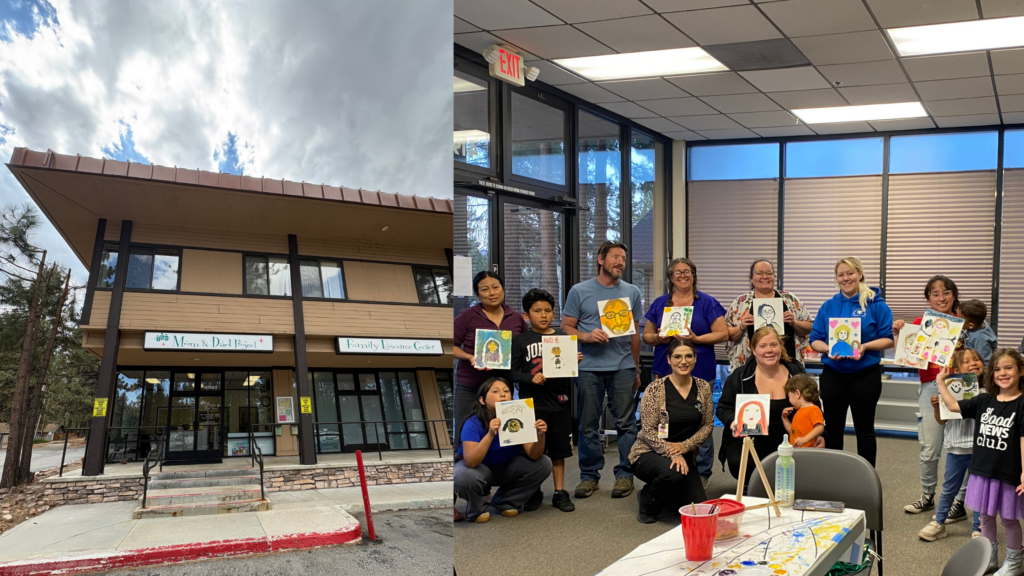
The Mom & Dad Project, a family resource center in Big Bear Lake, works with local providers to connect families to care. Executive Director Megan Meadors notes they serve over 2,500 clients each year and are concerned about further strain on an already stressed healthcare system.
“My biggest concern is that communities like ours are already filling gaps created by provider shortages and limited infrastructure,” Meadors said. “If resources shrink while needs grow, the gap between what families need and what is available will only widen.”
Meadors points to looming changes to Medi-Cal, California’s Medicaid program, as over 40% of Inland Empire residents rely on Medi-Cal for healthcare coverage.
Beginning in 2027, many adults in enrolled in Medi-Cal will need to meet new work or community engagement requirements — at least 80 hours per month. They will also have to submit re-eligibility every six months instead of once a year.
These new policies result from the Big Beautiful Bill – H.R. 1, passed by Congress in 2025, which made significant changes to the nation’s Medicaid system. If paperwork isn’t completed on time, people could lose coverage. H.R. 1 also threatens to reduce funding for Medi-Cal payments to hospitals and clinics, placing additional pressure on safety net providers, especially rural hospitals with narrow financial margins.
At the same time, California is preparing to move Medi-Cal members with unsatisfactory immigration status into a state-run fee-for-service plan. In isolated areas like Barstow, Blythe, and the Big Bear area, this means patients will have to navigate a more fragmented system without coordinated social services, putting even more weight on local clinics and nonprofits.
“Rural communities like ours are entering this period of uncertainty already at a significant disadvantage,” Meadors said.
There is some good news. To help mitigate cuts to rural healthcare, H.R. 1 also includes the Rural Health Transformation Program, a five-year, $50 billion effort to strengthen rural health systems. California was awarded $233.6 million and is awaiting federal approval to begin distributing funds across the state.
In the meantime, nonprofit providers like SAC Health help meet healthcare needs by offering in-person and telehealth services. SAC operates clinics in Barstow and Blythe, where many residents lack transportation and face higher rates of poverty. Additionally, many rural jobs are agriculture-based, exposing workers to occupational hazards, pesticide exposure and extreme summer heat.
SAC Health emphasizes telehealth and virtual appointments as crucial options for rural patients with reliable internet access who cannot travel for specialty care. However, for many with unreliable internet and limited digital literacy, accessing virtual care is not always an option.
To address this, SAC Health deploys two mobile clinics — medical and dental — to deliver essential care directly to isolated neighborhoods and agricultural communities. Provider shortages have accelerated the adoption of virtual care, allowing SAC Health to connect rural patients with specialists based at SAC Health’s Brier Campus in San Bernardino.
“As a family medicine physician, I know that reaching these rural and vulnerable patients is at the very core of SAC Health’s mission. We firmly believe that a patient’s ZIP code should not determine their access to quality healthcare,” SAC Health’s CEO, Dr. Jason Lohr said. “However, this work requires robust community partnerships and vital federal funding to bridge the financial gaps, ensuring we can keep our doors open and continue delivering comprehensive, compassionate care to the communities that need it most.”

The Inland Empire’s rural communities offer so many opportunities to connect with nature, enjoy the outdoors, and find a quiet break from the rush of daily life. Ensuring those who live and work in these communities have care close to home is essential to the well-being of our entire region.
Fortunately, organizations like SAC Health and the Mom & Dad Project are stepping up in powerful ways, connecting families to nutritious food, providing housing assistance, and helping bridge longstanding gaps in health access. Their work strengthens the fabric of these communities and brings us closer to a future where every resident, no matter how remote their location, can thrive with the support and care they deserve.