
Daniela Romero has long been committed to serving her community, which led her to a career in the nonprofit sector supporting those in need. At TrueCare, a community health clinic serving San Diego and the Inland Empire, she connects patients with essential services and resources. Despite the significance of her work, Romero has historically felt more comfortable working quietly behind the scenes rather than seeing herself as a leader.
After her first year in the Inland Empire Health Plan Foundation’s Champions for Vibrant Health Leadership Network, Romero shared she has now become more confident in her abilities, speaking up and actively advocating for those she serves.
“In the past, I would have been in the back of the room,” Romero said. “This program helped me and gave me the tools, knowledge and confidence to build my leadership skills.”
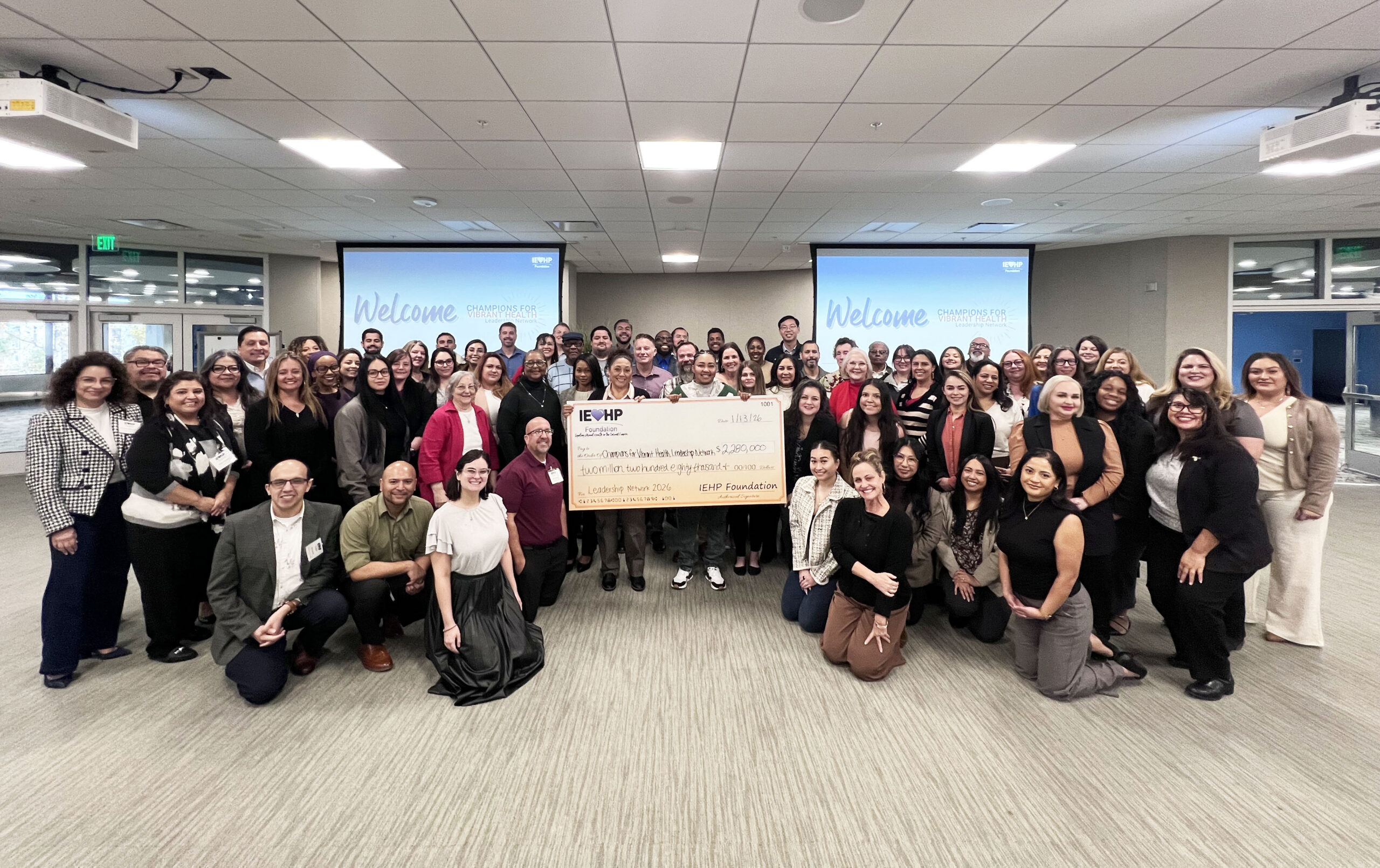
The Leadership Network is a two-year IEHP Foundation initiative that supports 40 Inland Empire nonprofits by strengthening leaders’ knowledge, networks and capacity. Each selected organization nominated an executive and an emerging leader for in-depth leadership training and advocacy experiences. In addition to funding, participants receive coaching and peer support to enhance their impact and address critical health and social service needs across the region.
Recently, IEHP Foundation awarded $2.3 million to the 40 nonprofits, bringing the total investment to $4.6 million over two years.
The Leadership Network connects participants with experts in leadership and public policy, providing additional tools and training at all career stages. The program was developed in response to feedback from hundreds of local nonprofits who identified the need for flexible funding, professional development and support for budding nonprofit leaders.
After the first year, the program found that leaders most improved their skills in public policy and managing change. Emerging leaders like Romero also said they became more self-aware and better at communicating.
As a result of her increased confidence and advocacy skills, Romero successfully secured funding from a county supervisor for a new food pantry program. Anthony White, vice president of community affairs and the TrueCare executive leader in the Leadership Network, was impressed by her growth and the program’s results.
“Daniela has become more comfortable owning her voice, asking thoughtful questions, and stepping into complex conversations with clarity and purpose,” he said. “The most meaningful part of this experience has been watching that growth happen in real time while also learning alongside her — it’s a true partnership that reinforces the importance of investing in emerging leaders who are deeply committed to community health.”
Fellow emerging leader Jennifer Rosales, human resources manager and admin director of Young Visionaries Youth Leadership Academy, shared that the network has supported her growth and provided opportunities to connect and learn from others across the region who share her passion for serving the community.
“The biggest impact for me was embracing the idea that, in order to be a good leader, you must get comfortable being uncomfortable,” Rosales said. “Leadership often brings challenges that push you into unfamiliar spaces, but through this program, I realized I am not alone in those moments. That sense of shared growth and shared support has strengthened me tremendously as a leader.”
The Leadership Network launched in January 2025 amid declining state and federal funding for nonprofits. Aimed at improving community health throughout the Inland Empire, the program sought to prepare nonprofit leaders to better lift their voices critical to the region and those they serve.
Over 75% of participating leaders reported never having previously engaged in public policy or advocacy. After training and direct engagement with state legislators in Sacramento last year, participants demonstrated an increased drive to become more involved in public policy.
Daniel Chagolla, chief operations officer at Cedar House Life Change Center, shared that public advocacy training and learning how legislation is developed have been the most meaningful aspects of the Leadership Network.
“At our organization, we are now in a place where we can make an impact and get involved in the public policy process,” Chagolla said.
This month, the 80 leaders will return to Sacramento with a shared legislative agenda focused on improving access to health care, nutritious food, safe and affordable housing, support for families and children, and economic mobility.
In addition to supporting emerging leaders, experienced professionals like Dr. Danielle Kilchenstein, executive director of government relations at Inland Southern California United Way and Inland Southern California 211, value the opportunity for community leaders to collaborate and help reshape systems through shared policy goals and advocacy.
“The Network transforms passion into powerful policy and advocacy results,” Kilchenstein said. “It empowers leaders not only to care for their communities, but to fiercely champion them, turning voice and lived experience into collective advocacy impact that advances equity and builds healthier futures for all.”
Each of the 40 nonprofits in the network support families and children in need by providing such services as affordable housing, basic needs assistance, behavioral health, education, substance use treatment, youth development, and workforce development. All efforts aim to reduce health disparities across Riverside and San Bernardino counties. After the first year in the Leadership Network, 80% of organizations improved or expanded their services.
Carly Bennett-Valle, CEO and CFO of Boys & Girls Club of Southwest County, said the grants and training have directly enhanced their ability to serve youth and families.
“This investment helped us grow our capacity, improve internal systems and increase our reach, ensuring we could better support youth across multiple domains of health and well-being,” Bennett-Valle said. “It has allowed us to address organizational needs around staff development, infrastructure and program expansion.”
Now beginning their second year, the 80 nonprofit leaders will experience four local in-person sessions, a Sacramento advocacy trip, and a three-day strategy summit. Leaders like Patricia Etem, vice president, Southern California and Coachella Valley, of Health Career Connection, appreciated the opportunities in year one and are eager to continue strengthening relationships and skills in their second year.
“I am looking forward to continuing strategically insightful and action-engaged mentorship from the policy and leadership coaches,” Etem said, “as well as deepening engagement and connection with the other leaders to advance vibrant health collaboratively across the Inland Empire.”
Truly, there may be no more powerful investment than building the strength of local leaders who work daily to improve the health and well-being of residents in our community.